Food

Jack and the Dogwood

I never really understood the story of Jack in the Beanstalk… who would trade a cow, even a sickly one for beans? There was nothing magical about the beans I grew up with; black or brown types were from cans and green beans were often frozen.

At the organic market last Saturday I came across an old woman selling large green pods, luckily she didn’t want to trade them for a sickly cow… 10 pesos would do.
I asked her what they were called and she said ‘Cuil.’ She explained that if I opened them up there were two delicacies inside. One was the cotton like pith that surrounded the individual seeds. It was juicy and sweet and I am sure would make a great agua fresca or sorbet. The second delicacy were the seeds themselves. I took the pods back to Cafe Juanita to ask the women I work with if they knew about them. They had eaten the pith but not the seeds. We opened the pods, removed and cleaned the seeds and then boiled them for a few minutes until they began to soften. I drained them and then fried them in garlic oil until they started to brown. I served them with crumbled queso fresco and a drizzle of our house-made sesame chili oil. The texture was a cross between butter and a chick pea and very flavorful. A true delicacy and worthy of a cow trade!

I looked online to see if I could find some more information about these pods but when I googled ‘cuil’ nothing came up. I finally found a reference in Elsevier’s Dictionary of Trees relating the ‘cuil’ to the dogwood. Here is a photo of the dogwood pods and while there is a similarity I am not entirely convinced. I may need to go visit San Pedro Cafetitlan to see the tree for myself. Looking forward to serving this up at our ‘Village to Table’ dinners that we will be starting in October at our Chiles&Chocolate Cooking School.

For information about our cooking classes: http://www.huatulco-catering.com or chiles.chocolate@yahoo.com
Food

Fried Zucchini Blossoms

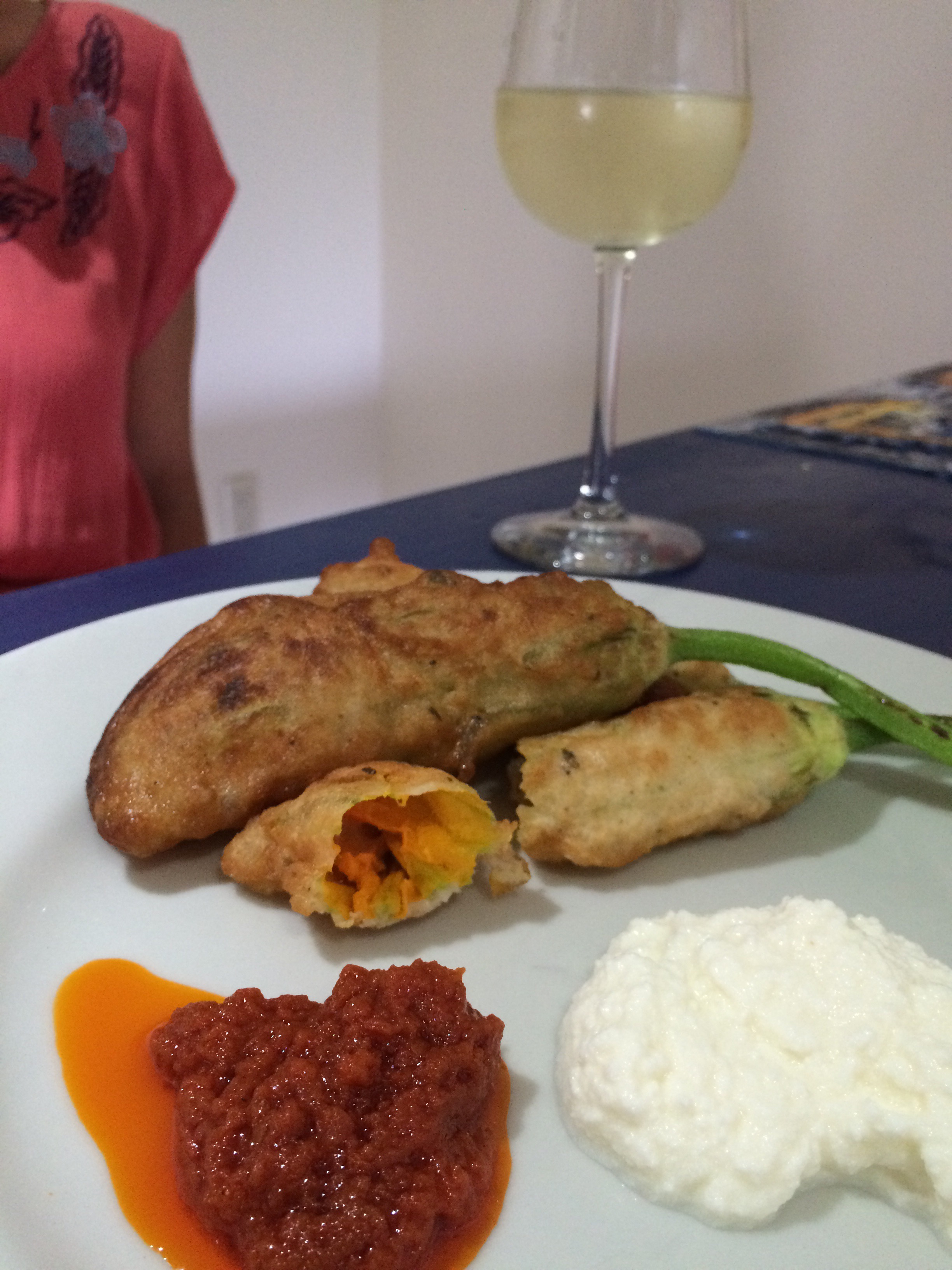
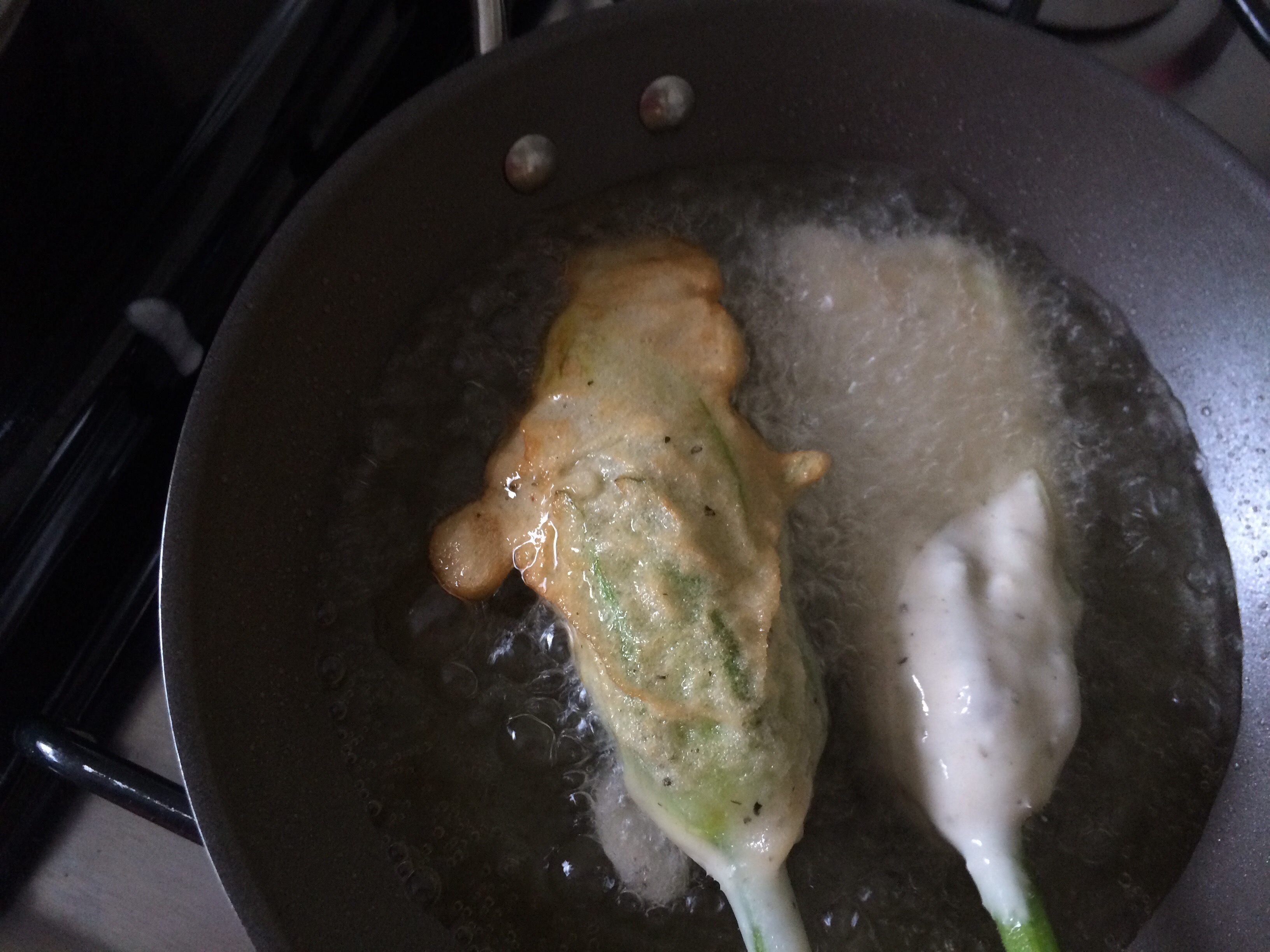
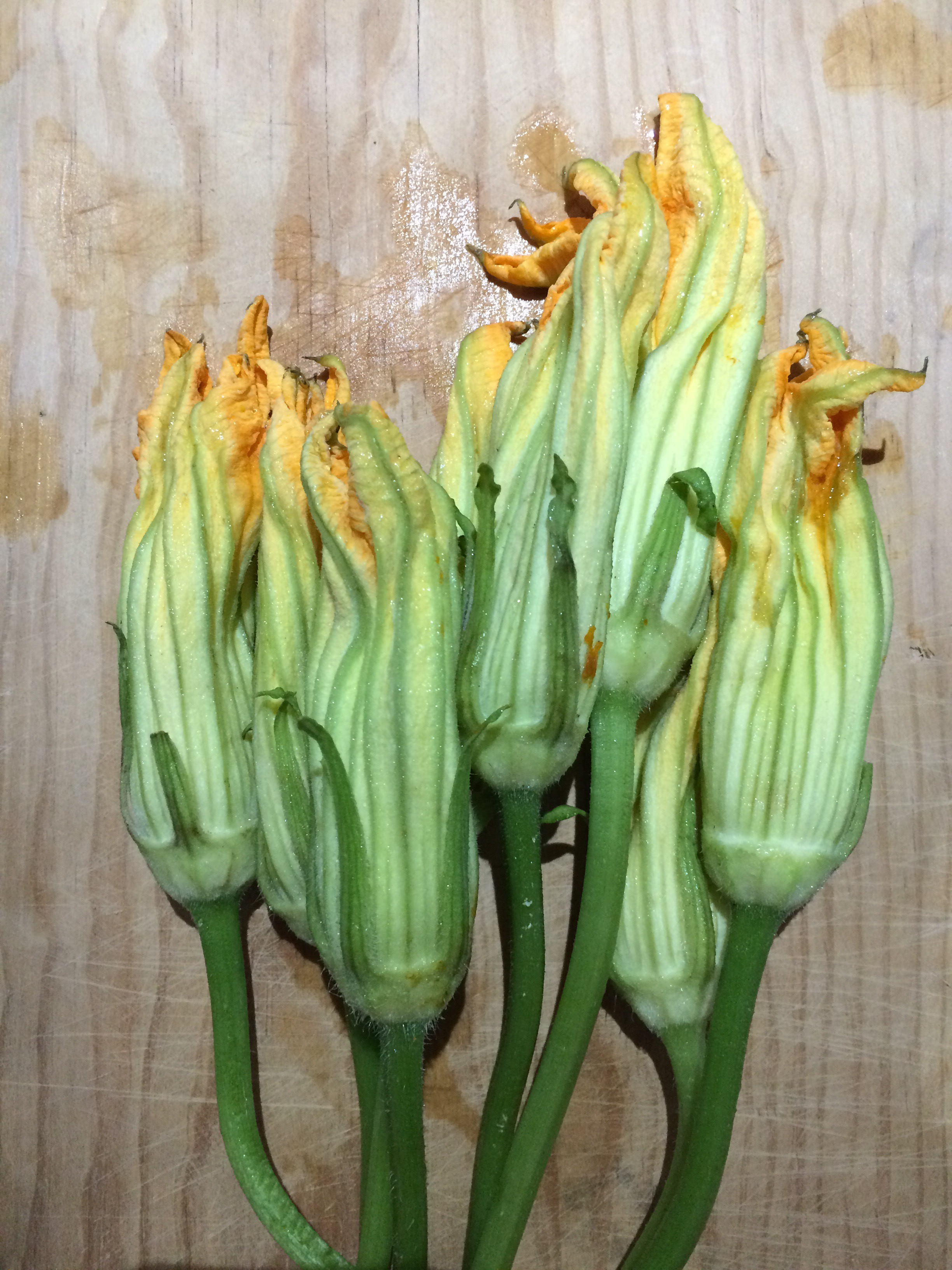
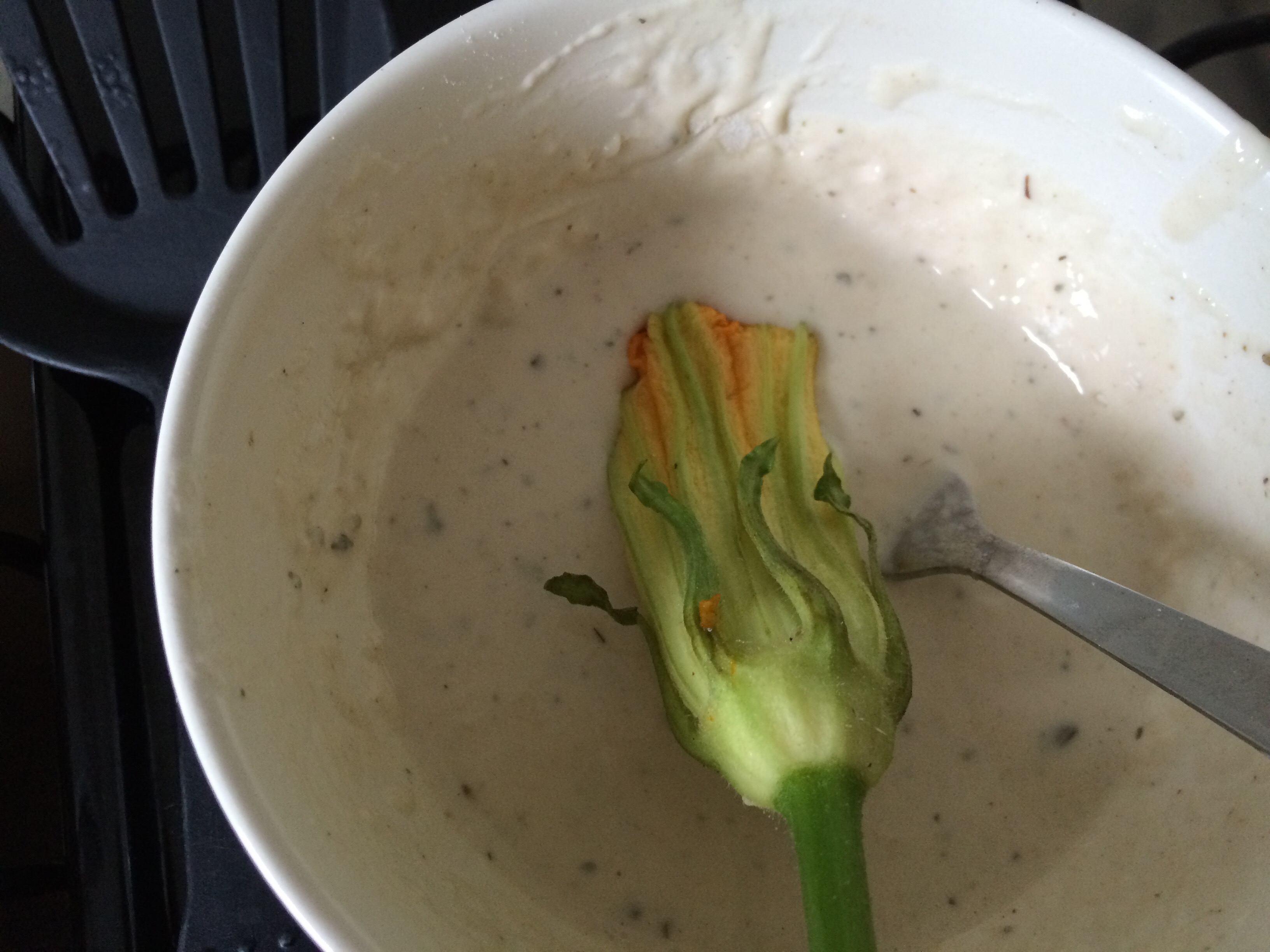
I always find lots of inspiration at our local organic market that is held the first and third Saturdays of the month in Santa Cruz. This morning I got some beautiful and fresh zucchini blossoms with the stems intact. I have done several recipes before for stuffed blossoms but have found stuffing them to overshadow their delicate flavor. I decided to batter and fry the blossoms while serving the stuffing on the side. Wow! Not only were the blossoms much lighter but they kept their natural shape. I used a simple flour batter with a teaspoon of yeast, salt, Italian seasoning, a splash of olive oil and enough water to make a paste-like consistency. I served them with some fresh ricotta and spicy salsa and a glass of Pinot Grigio for a perfect summer evening meal. Enjoy!

Food

Fiesta Cooking Class Fun

Loved spending the morning with these two couples from Arkansas. So inspiring to meet people who seek out cultural experiences when they travel. Teaching cooking classes is one of the most rewarding aspects of my job- I always meet the most interesting people! Thanks for a great day Arkansas Four!!  For more information about our classes visit http://www.huatulcocookingclasses.com


Food

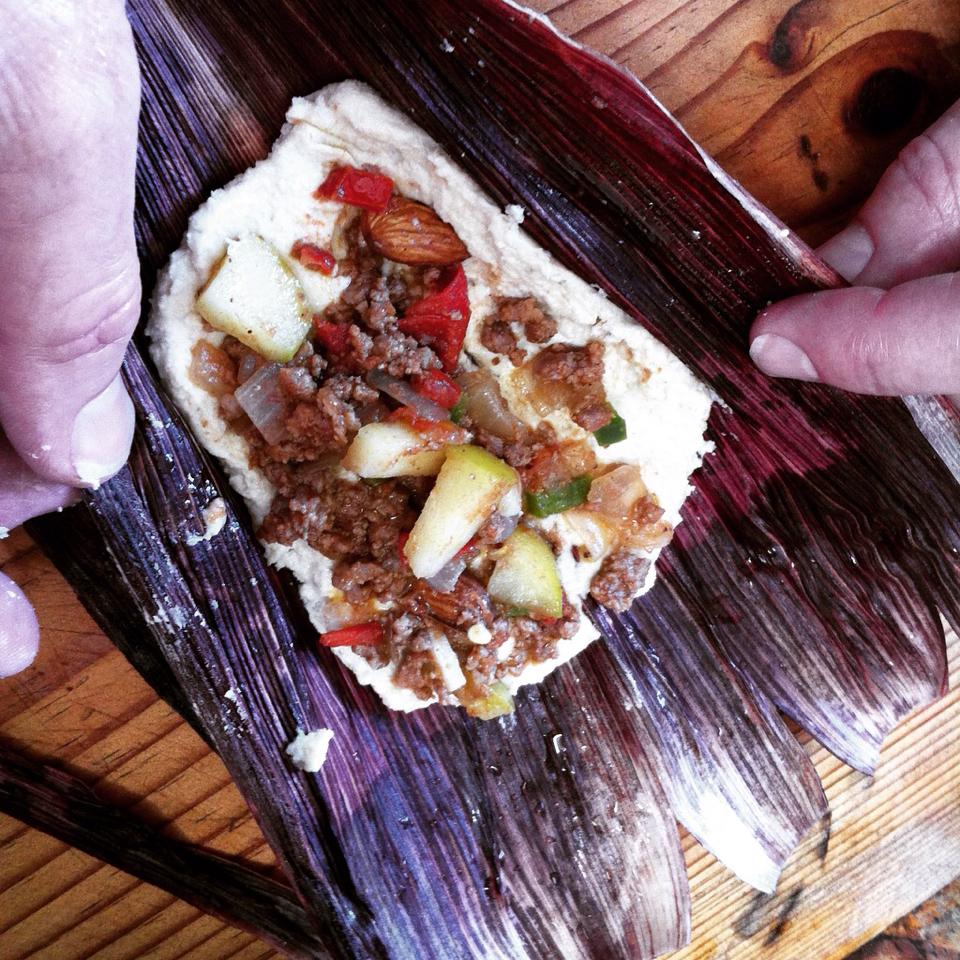
Festive Picadillo Tamales in Corn Husk

Today we made tamales for the ‘Encuentro de Cocineros’ event. The event is to raise money for Pina Palmera- a very worthwhile organization that works with people with disabilities, many of whom are indigenous and come from remote communities.

For more info. on Pina Palmera and how you can get involved:

http://www.pinapalmera.org/pina-palmera.htm?lng=en

We teach these tamales in our Fiesta class at Chiles&Chocolate Cooking School.

http://www.huatulco-catering.com/

Here’s the recipe:

Picadillo Tamales in Corn Husk
PICADILLO
1 tablespoon olive or vegetable oiltamales
1 pound ground beef
1/2 onion, peeled, finely chopped
1 garlic clove, peeled, finely chopped
1 apple, peeled, cored and chopped
1 1/4 cups tomatoes, peeled and chopped
1 fresh jalapeno, seeded and chopped
1/2 cup raisins
½ cup almonds
1 teaspoon cinnamon
1 teaspoon cumin
Salt and ground pepper, to taste
TAMALES
12 corn husks, soaked until soft
1/2 cup lard or vegetable shortening
2 cups masa harina
1 teaspoon salt
1 teaspoon baking powder
1 1/2 cups warm chicken stock or broth
For the picadillo filling: In a large frying pan over medium heat, heat the oil and
add the ground beef, onion, and garlic and cook, stirring, until the beef is brown and
the onion is tender. Add the apple, tomatoes, jalapenos, raisins, cinnamon, cumin,
and salt and pepper. Cook uncovered for about 20-25 minutes, stirring occasionally
to prevent sticking.
For the masa: In a large bowl, cream the lard or vegetable shortening until it’s light
and fluffy. In a separate bowl, mix the masa harina with the salt and baking powder,
then gradually beat it into the lard, taking care not to add too much at once.
Finally, slowly beat enough of the warm chicken stock into the masa mixture to
make a mushy dough. To see if the masa is ready, place a small piece on top of a cup
of water. If it floats, the masa is ready; if it sinks, continue to beat until the texture is
light enough for it to float.

1

To assemble the tamales: Place softened cornhusks on a flat surface. Spread 3
tablespoons of the dough on each husk, leaving plenty of room all around for folding.
Spoon 2 tablespoons of the picadillo in the center of the dough. Roll up the husk
from one long side, so that the filling is completely enclosed, then fold the ends of the
husk under. You can tie with strips of husk or kitchen twine, if desired.
To steam the tamales: Layer the folded husks seam side down in a flat-bottomed
steamer colander. Bring to a boil and cover tightly. Reduce heat and steam the
tamales for 1 hour. Serve warm, unwrapping the husks to reveal the fluffy tamales
inside.