Food, Living, Mexico

Why Oaxaca Is One of the Most Fascinating Cuisines in the World

By Alicia Flores—

Travelers often arrive in Oaxaca, Mexico expecting tacos and margaritas. What they discover instead is one of the most intricate and culturally rich cuisines on earth.

Oaxacan cooking is not simply a collection of recipes; it is a living expression of geography, agriculture, and tradition. Corn, chile, cacao, herbs, seeds, and seasonal ingredients combine in ways that have evolved over centuries. Many techniques still used today predate the arrival of the Spanish.

At the heart of this cuisine is corn.

For thousands of years, Indigenous communities across Mexico have cultivated and refined maize varieties adapted to different climates and soils. The process of nixtamalization—soaking corn in an alkaline solution before grinding it into masa—is a technological achievement that transformed corn into a nutritionally complete food.

From this simple ingredient comes the tortilla, the foundation of daily life throughout Mexico.

Visitors are often surprised by how different a handmade tortilla tastes compared with the versions they may know from supermarkets. Fresh masa, pressed and cooked on a hot comal, produces tortillas that puff slightly as they cook, releasing a warm aroma of toasted corn.

It is a small moment that reveals just how deeply food and culture are intertwined.

Another hallmark of Oaxacan cuisine is mole. These complex sauces can contain dozens of ingredients—various chiles, seeds, spices, chocolate, and nuts—slowly toasted and blended into a deeply layered flavor profile. Every region and family has its own variation, and recipes are often passed down through generations.

Sourcing food play an essential role in the culinary landscape. A walk through the street of Huatulco reveals mountains of chiles, fresh herbs, cacao beans, cheeses, tropical fruits, and handmade tortillas. Cooking here begins with the ingredients themselves.

For travelers who want to understand these traditions more deeply, cooking classes can offer an extraordinary window into local culture. Learning how ingredients are prepared, how flavors are balanced, and how techniques have evolved over centuries brings the cuisine to life in a way that simply eating at restaurants cannot.

Food becomes a story.

In Huatulco,  cooking experiences give visitors the chance to explore this culinary heritage firsthand—preparing traditional dishes, learning about regional ingredients, and discovering why Oaxaca has earned a reputation as one of Mexico’s great gastronomic destinations.

Those curious to explore further can learn more about the experience offered by Chiles and Chocolate Cooking Classes, where guests dive into the history of Oaxacan cooking through hands-on preparation and discussion of the ingredients and traditions that define the cuisine.

Discover Oaxacan Cooking in Huatulco

For travelers who want to go beyond restaurant dining and truly understand the ingredients and traditions behind Oaxacan cuisine, hands-on cooking classes offer a unique perspective.

In Huatulco, Chiles and Chocolate Cooking Classes, led by Chef Jane Bauer, invite guests into the kitchen to explore the foundations of Mexican cooking. Participants learn about regional ingredients, traditional techniques, and the cultural stories that shape the cuisine of Oaxaca.

The cooking studio has eight stations which allows everyone to take part in the preparation of several dishes while discussing the role of corn, chiles, cacao, and other essential ingredients in Mexican food traditions.

By the end of the experience, guests leave not only with recipes but with a deeper understanding of why Oaxaca is considered one of the most important culinary regions in Mexico.

Classes run regularly in Huatulco and advance booking is recommended.

Learn more or reserve a spot here: http://www.huatulcofoodtours.com
Uncategorized

Cauliflower with Indian Spices

Ingredients
1.5 tbsp light cooking oil
1/3 onion finely chopped
1/2 tbsp finely chopped ginger
1/2 tbsp finely chopped garlic
1/4 tsp turmeric powder
1/4 tsp red chilli powder
1/2 tbsp coriander powder
1/2 tsp amchoor powder
1 tbsp tomato paste
1/3 head of cauliflower cut into small florets
water as needed
salt to taste
finely chopped fresh cilantro and yogurt for garnish

  1. Heat oil in a large non-stick pan on medium high heat, add in onions, ginger and garlic and fry for a few minutes till onions soften and lightly brown.
  2. Stir in the spices and tomato paste and mix well. Now add in the cauliflower florets and mix to coat well with the spice mixture. Cover the par and cook for 5-6 minutes, stirring occasionally till the cauliflower is cooked through.
  3. If you feel the spice blend is too dry and starts to stick to the pan, add a splash of water and mix well. Season with salt and give it a final stir.
  4. Garnish with fresh cilantro and yogurt, serve warm.
Food, Living, Mexico

Cafe Juanita Cookbook

I wrote this cookbook for the 10-year anniversary of my restaurant Cafe Juanita. I am filled with so much gratitude to the amazing team that works alongside me as we enter our 17th year in business.

If you have been to the restaurant we would really appreciate if you took a moment to post a review: https://g.co/kgs/kteosNN

Follow my personal Instagram: https://www.instagram.com/livingfoodmexico/

Uncategorized

Soufflé

Because you deserve more than an omelette! Make sure you are following me on Insta @livingfoodmexico

To make a soufflé is to transform eggs into a light pillowy cloud. Soufflé comes from the French and means to inflate or blow. I use the yolks to make a creamy bechamel with parmesan and tarragon- I am obsessed with tarragon. I beat the whites until they are filled with air and carefully mix them with my bechamel. As it cooks the egg whites inflate the silky yolks.

1.5 tablespoons unsalted butter, plus more to grease dis
1/3 cup freshly grated parmesan cheese
1.5 tablespoons all-purpose flour
1/2 cup whole milk
2 eggs separated
1 teaspoon of tarragon
1/2 teaspoon salt
1/2 teaspoon mustard
1/4 teaspoon cream of tartar1.

Preheat your oven to 400

  1. Grease a ramekin with butter and sprinkle with Parmesan.

Bechamel

  1. In a small pot add butter with flour, cook on low while stirring to make a roux.
  2. Slowly add in the milk and keep stirring on low until it begins to thicken.
    Remove from heat and let cool for 5 minutes.
  3. Add your favorite mustard. Season with salt and pepper.
  4. Gently mix in one yolk at a time.
  5. Add tarragon and remaining parmesan cheese

Egg whites
Beat your 2 eggs whites with cream of tartar until stiff.

Fold in half the egg white mixture into the bechamel. Be gentle. Then fold the bechamel into the remaining egg whites. Sprinkle the top with parmesan and put into the oven for 30 minutes.

Serve with a green salad.

Food, Living, Mexico

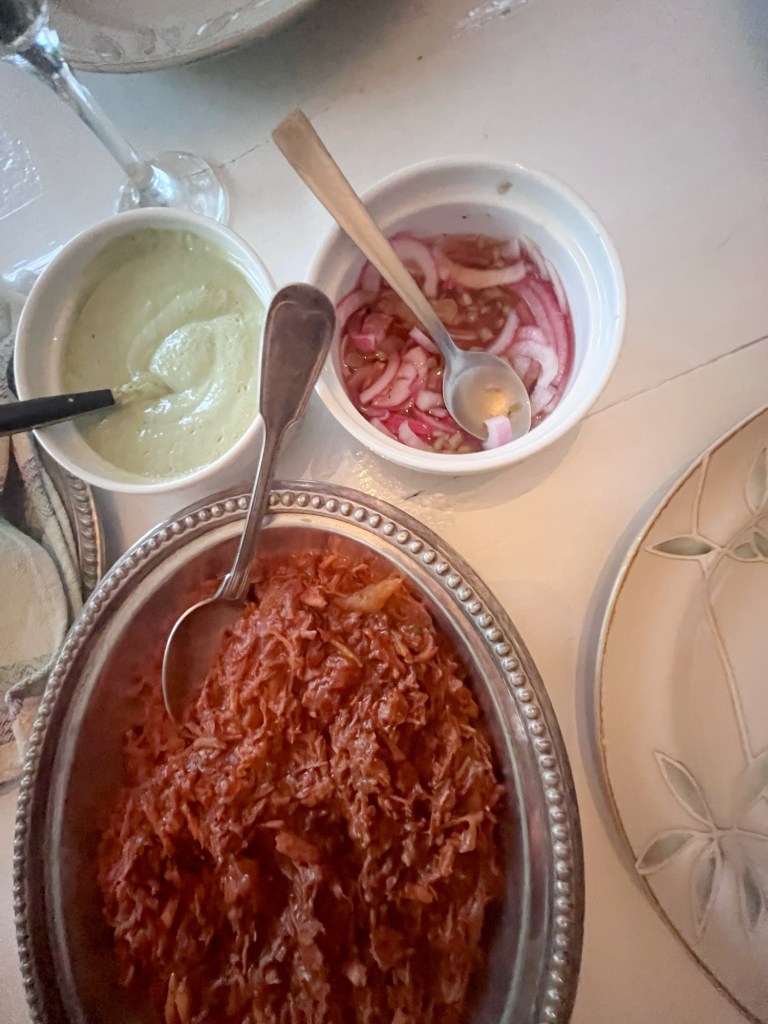
Cochinita Pibil

Marinade: 

10 garlic cloves roasted 

2 tablespoons lard or vegetable oil 

3 ounces of red (rojo) achiote paste

2 tablespoons Mexican oregano 

3 whole cloves 

1 cinnamon stick 

2 tablespoons whole black peppercorns 

1 tablespoon whole cumin seed 

1 tablespoon whole allspice berries 

1 tablespoon juniper berries

1/2 cup orange juice,

1/3 cup lime juice 

1/4 cup cider vinegar salt 

For the Pork: 

1 kilo pork shoulder or pork loin 

2-4 banana leaves 

2 Roma tomatoes

sliced 1 red or green bell pepper 

1 white onion, sliced 

12 bay leaves 

Blend all marinade ingredients until it is a smooth sauce. Pour over pork. Mix well, cover and keep in the fridge for at least 6 hours and up to 24 hours. 

Bake in oven 3 to 4 hours: Cooking this takes 3-4 hours, so plan ahead. Preheat the oven to 325°F. Line a large casserole with a double layer of heavy-duty foil, or a triple layer of regular foil – you want a good seal.

(Traditionally, cochinita pibil is wrapped in banana leaves, which add a wonderful flavor to the pibil. So, if banana leaves are available—you may be able to get them at the same store as the achiote paste, or at an Asian market—consider using them. Just heat the leaves first to make them more pliable.) 

Pour in the pork and the marinade and close the foil tightly. Put the casserole in the oven and bake at 325°F for at least 3 hours. You want it pretty much falling apart, so start checking at the three-hour mark. 

Remove bay leaves. Shred cooked pork meat with 2 forks: When the pork is tender, take it out of the oven and open the foil. Remove the meat with a slotted spoon to a bowl, then shred it with two forks. You don’t have to shred the pork, but I like it this way. Pour enough sauce over the meat to make it wet. 

To serve, either use this as taco meat or over rice, garnished with cilantro, lime wedges and queso seco, a Mexican dry cheese a little like Greek feta. Pickled red onions are a traditional garnish, and if you like them, they’re good, too.

Food, Mexico

Homemade Grapefruit Soda

I love fresh homemade grapefruit soda. I got this awesome vintage juicer from my mum’s cupboard, she never used it anyway, and it is perfect for single servings. Squeeze your citrus of choice, add lots of ice and top with club soda.
*make it Paloma by adding a shot of tequila
*make it a Greyhound by adding a shot of gin or vodka

#mexicanfoodporn #mexicanfoodlover #mexicanfoodisbest #mexicanfoods #mexicanfoodie #mexicanfoodislife #cookingclasses #mexicancooking #oaxacatravel #oaxacafood #tacolover #cocktails #cocktailrecipes #huatulco #huatulcomexico #huatulcooaxaca #travelfoodie #travelforfood #foodgasmic #foodstylish #restaurantlife #culinaryaddict #chefsofinstagram #restaurantlife

https://www.huatulcofoodtours.com/

Uncategorized

Have we always been obsessed with our own image?

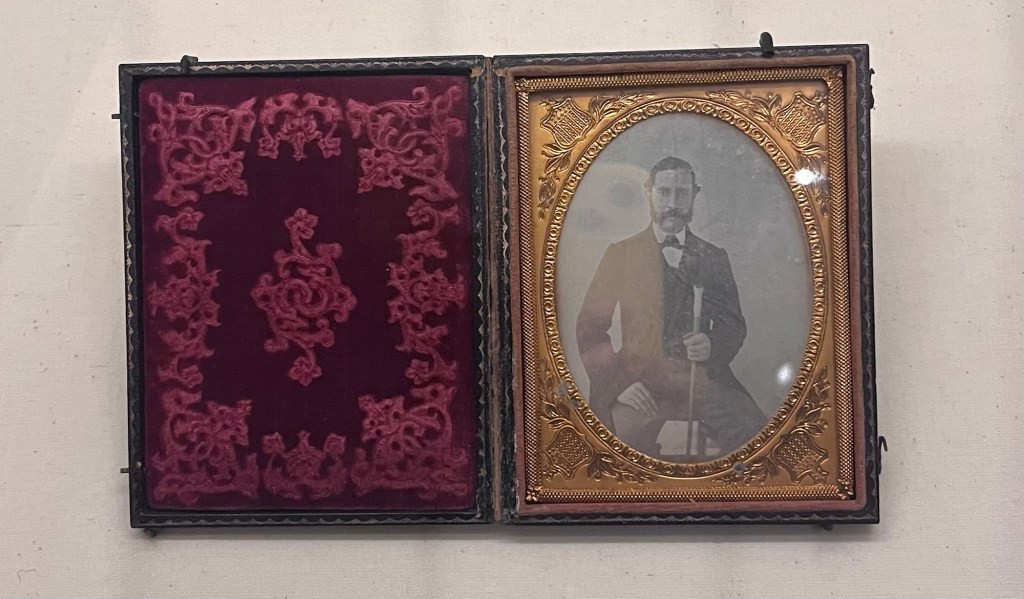
Yesterday I visited the Caixaforum in Seville, Spain and saw an exhibition, that is on loan from the Prado in Madrid, showcasing Spanish portraiture from the 1800s.

Perfectly curated to show the chronology of obsession we have had towards the self. It started out with portraits done of kings and other upper class gentry who could afford such luxuries. When portraiture became more common in the mid 1800s there were children and merchant class men and women who could afford to have their likeness preserved for future generations.

There was a room devoted to death mask portraits- yes… paintings done of people just after they have expired.

And then miniatures became popular because they were more accessible- small portraits that one could carry around and even give as an intimate gift. This has to be the precursor to the ‘wallet photos’ people used to have. As I examined the delicate miniatures on display I looked around at the number of people taking photos with their phones and realized we haven’t changed that much.

The mirror we know today was invented in Germany approximately 200 years ago and even then it wasn’t the common item it is today as it wasn’t accessible to all, only the upper classes could afford to buy a mirror because of the high cost. Until the beginning of the 1900s most families could only buy small mirrors to check their hairdos and bonnets. Prior to this people relied on nature to see their likeness, think of Narcissus staring into a pond and seeing his reflection.

How has this access to our image affected the way we live today? Our thoughts seem perpetually turned inward and our focus has never been more ego-centered. Something to consider next time you look in the mirror or snap a selfie.

Food, Living

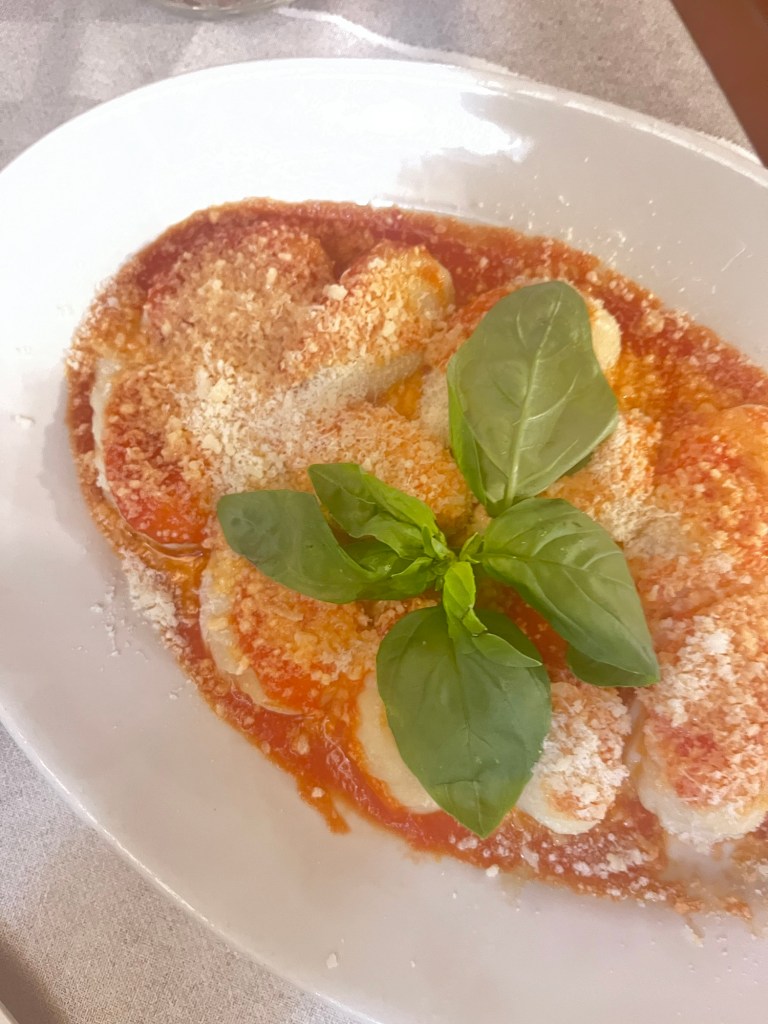
Travel without a plan and see what happens…

When I head off on a big holiday I usually have a tentative idea of how things will pan out and where I will end up.

However, a lot can be said for being open to letting unexpected delights and opportunities derail my original vision.

The seed for this current vacation was the spontaneous purchase of concert tickets to see the Dave Matthews Band in Lisbon. I bought the tickets on a whim six months before the trip when a friend sent me the DMB concert link so I could see about shows in Mexico, where I live.

I arrived in Lisbon with just the first five days of accommodations and the concert booked. After my first social media post a friend reached out who would be in Spain later in the month and would I like to join them touring Andalucía? Um… yes, done.

A few days later another amazing friend wrote to tell me she was eating and beaching around Sardinia alone and would I like to meet up. I booked a last minute flight and before you know it we were pigging out on culurgiones after a day in the cold turquoise waters.

I am still on this trip. Heading back towards Lisbon and then to Oslo to drive north and see some fjords.

One of my favorite things to say is ‘over preparation is procrastination’. I apply this when rolling out a new business idea and now also when traveling. So randomly buy a concert ticket or a flight and just keep saying yes.

Interested in following my adventures, check out my Instagram @livingfoodmexico