
“Men are afraid that women will laugh at them. Women are afraid that men will kill them.”
Margaret Atwood
March 8th we will celebrate another International Women’s Day. It is a global day celebrating the social, economic, cultural and political achievements of women and has been observed since the early 1900s. So just how much have we accomplished in the past 100 years?
In 1920, women were granted the right to vote in the United States. In Canada, most provinces had granted the right to vote by 1922, with the exception of Québec, where women were denied the vote until 1940. First Nations women did not earn the right to vote until the 1960s. Today, despite the ‘right’ to vote, many women globally do not have a voice in the politics that affect their lives.
While we have seen more women in politics, corporate positions and earning potential- although women still earn less than men for the same work. There are still armies of women around the globe who are single mothers, carrying the emotional and financial burden for their families. Lack of access to education, birth control and healthcare often make it impossible for low-income women to change their situation.
While in the public sphere there has been a lot of legislation put in place globally to protect women, most women still live with the awareness of physical risk of being a woman. In Canada on average, every six days a woman is killed by her intimate partner. Internationally, “the primary victims of human trafficking are women and girls, the majority of whom are trafficked for the purpose of sexual exploitation. Traffickers primarily target women because they are disproportionately affected by poverty and discrimination, factors that impede their access to employment, educational opportunities and other resources” http://www.stopvaw.org.
But employment and wealth won’t necessarily protect women from the violent culture we have created, as evidenced by this year’s #metoo campaign.
So, while we are celebrating the past strides we have made, both men and women, to create a better and just world, let’s acknowledge how much still needs to be done and the rough road ahead.
See you next month,
Jane

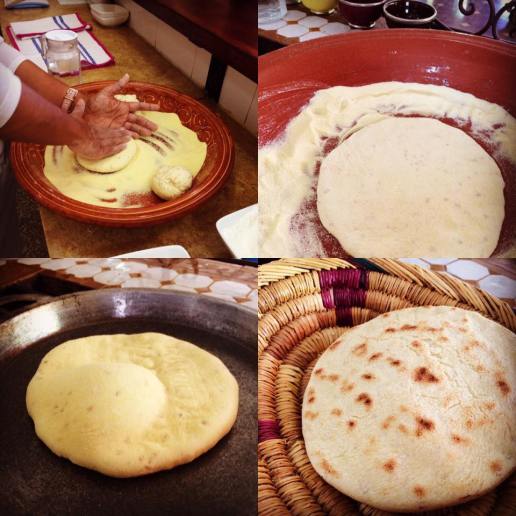
 The highlight of the class was the opportunity to meet Ilam. When touring Morocco most of the Moroccan people you interact with are men. Most of the waiters, tour guides and even hotel staff tended to be men, so I really appreciated the chance to chat with Ilam over lunch.
 Carmen Thyssen, a baroness through her marriage to her third husband Heinrich and Miss Spain in 1961, started collecting art in the 1980s using her husband’s fortune. She amassed a collection that includes Monet, Braque, Hassam, Rubens, Degas and many more. There has been a lot of social scandal concerning her collection since her husband’s death that make her life sound like a telenovela. In the museum, the walls are all salmon pink, it is SO bold and one of the requirements made by Carmen. In 2011, she also opened a museum in Malaga that focuses primarily on 19th century Spanish art.
 The nameless woman in The Hotel Room by Edward Hopper is a wonderful piece for a solo female traveler to contemplate. Here is what the museum has to say about this extraordinary work:
 Duchess Millicent Sutherland painted by John Singer Sargent in 1904 was much more than a pretty face. A fierce advocate for social reform and better working conditions despite her social status, she was sometimes called ‘meddlesome Millie’. During WW1 she organized an ambulance unit and was recognized by the Belgium, French and British Red Cross for her work during the war. She was married three times and penned several novels. The 1926 review of her novel ‘That Fool of a Woman’ in The Saturday Review stated: The power of the book lies in an emotional but extremely intelligent style, in an analysis of character which is revealed as much by detail as by words, in a feeling for atmosphere (war-charged Europe is particularly real), but mostly in the fact that the heroine is a sentimental heroine with a brain. Never does she see her mistakes quite in time—but neither is she hopelessly stupid nor a wilful misrepresenter of unflattering fact. Lonely, lovely, sentimental creature that she is, very much too late she sees the wherefore and why of foolish choice and subsequent disaster.
 Happy Love Month! This is my editorial from The Eye magazine this month. For those of you who don’t me personally, I am the editor of an English-language magazine in Mexico called The Eye, in addition to owning a restaurant and a cooking school. The magazine really allows me to explore different aspects of life in Mexico and connect with amazing writers and of course our readers. You can check out current and back issues online at
  This is my editorial from The Eye magazine this month. For those of you who don’t me personally, I am the editor of an English-language magazine in Mexico called The Eye, in addition to owning a restaurant and a cooking school. The magazine really allows me to explore different aspects of life in Mexico and connect with amazing writers and of course our readers. You can check out current and back issues online at
  I have been involved in several building projects while living in Mexico but none has been as exciting or as rewarding for me as our Chiles&Chocolate Cooking School. Located in the village of Zimatan, I wanted the building to fit in with the architecture of the buildings in this rural area. Most of the houses in the village are rectangular with small windows and galvanized metal roofing. Since our cooking classes showcase the beauty and dignity of Oaxacan cooking, our building needed to be a testament to that as well. In the same way a mole recipe evolves using the ingredients of a particular area, our building needed to use materials that were found around us; river rock, stone, wood and I felt the same should be applied to labor.
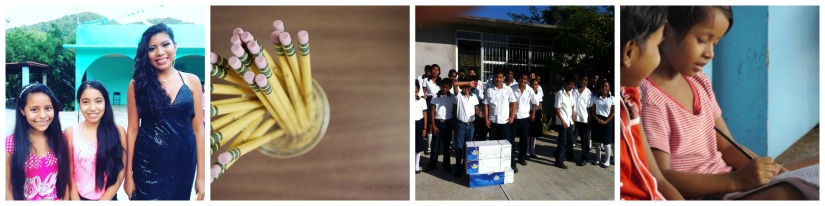 Fifteen is a magical age- in Mexico it is the time of quinceañeras and celebration as girls teeter on the brink of womanhood. It is also the age of high teen pregnancy rates- especially in lower income areas. The report — “Maternity childhood” Population Fund United Nations (UNFPA) revealed that Mexico is the leading nation in teen pregnancies with the alarming rate of 64.2 teen pregnancies per thousand births. Generally speaking, teen pregnancies are associated with poorer living conditions and the girls receiving lower levels of education. Girls with a higher education level, with a dream for the future and with a hope of success are much less likely to get pregnant.
 Jane Bauer