Food, Living

It takes a village… the building of our Chiles&Chocolate Cooking School

picmonkey-collageI have been involved in several building projects while living in Mexico but none has been as exciting or as rewarding for me as our Chiles&Chocolate Cooking School. Located in the village of Zimatan, I wanted the building to fit in with the architecture of the buildings in this rural area. Most of the houses in the village are rectangular with small windows and galvanized metal roofing. Since our cooking classes showcase the beauty and dignity of Oaxacan cooking, our building needed to be a testament to that as well. In the same way a mole recipe evolves using the ingredients of a particular area, our building needed to use materials that were found around us; river rock, stone, wood and I felt the same should be applied to labor.

Village life is very gender segregated. Women in my village are not even permitted to attend town meetings unless they are the ‘head of their household’- meaning they have no husband. So I was more than a little nervous as this project was my first time building without a husband to negotiate and deal with decisions such as where to put the septic tank.

Blandino, the mason, and his two sons, who live in the village, collected rock from around the property to build our retaining wall and patio. In other projects I have been involved with we always ordered our cement blocks already made from the hardware store. Blandino mentioned that Andres, a man in our village, made blocks, so we decided to make them on-site. This decision led to us having a higher quality block, it was about the same price as buying the ready-made blocks, but we also created a job.

Seeing Andres make blocks was amazing. All cement was mixed by hand, poured into molds and then set in the sun to dry. When it came time to get a door, the metal smith in the village made one and the electrician who installed the lights lives just a few doors down.

In the cooking classes I talk a lot about the dignity of what we term ‘women’s work’- cooking, housekeeping, child rearing. My experience of being a stay-at-home mother in Mexico during my daughter’s early years was life changing and forced me to reevaluate my own ideas about gender. It was the beauty of this time that led me to want to give cooking classes.

I always have thought of the cooking classes as a way of shedding light on the dignity of ‘women’s work’ but as I look around the cooking school it dawns on me that the building is truly a testament to the beauty of ‘men’s work’.  Much in the same way it takes a village to make a tortilla; men to grow the corn and women to grind, form and cook it on the comal, our cooking school is the product of a long line of tradition.

For more information about our classes: www.HuatulcoCookingClasses.com

Food

Porcini Sea Salt

porcini-saltOur latest salt is made with wild porcinis from San Antonio Cuajimoloyas, a village 56 kilometers away from the Oaxaca city. Located 3200 meters above sea level, the high-altitude is the ideal climate for mushroom foraging in the rainy season.  I had the privilege of attending the annual Mushroom Festival in Cuajimoloyas last July and in addition to porcinis we collected over 200 different types of fungi during our 6-hour hike.

The name porcini means “piglets” in Italian. They’re also known as the king bolete, cèpe (in French), Steinpilz (the “stone mushroom” in German), and a host of other fun names from all over the world. The Latin name is Boletus edulis.

Porcini mushrooms are a famous and delicious addition to any dish. Forage the ultimate umami flavor with our Wild Porcini Sea Salt. Hearty porcini mushrooms are mixed with natural sea salt to produce a mouthwatering, savory blend that shines in any cuisine. Like so many other good edible mushrooms, porcini are mycorrhizal. This means that the underground vegetative growth of the mushroom, called the mycelia, enters into a symbiotic relationship with the roots of plants. Why would you care as a chef? It means that because of this complex relationship that occurs in nature, porcinis aren’t easily cultivated and are seasonal.

Sprinkle Wild Porcini Sea Salt on beef, veal, pork, poultry, fish, rice, potatoes, pasta, polenta, popcorn, soup, cream sauces, tomatoes, dipping oil, rubs.

Other sea salts in our line are Rosemary Sea Salt and Hibiscus Sea Salt. They are available at our restaurant Café Juanita in Marina Chahue, Huatulco and at our cooking school, Chiles&Chocolate. http://www.huatulcocookingclasses.com


Living

Election Thoughts

libertycrying1

It’s an awkward situation. You can hear your neighbor next door raising his voice, punching a wall, talking shit. Should you say anything? Is it any of your business? It’s so ugly. The voices get louder, he’s calling her all sorts of names, the kids are crying and then a fatal punch… boom.

It’s late. I should be in bed as I have to get up early, but I am drawn to the election results like a bad accident and as the numbers go up in favor of Donald Trump I feel sick. I am not American- is it even my problem? Am I entitled to feel the complete disgust that is washing over me?

I loved the posts earlier in the day of women flocking to Susan B Anthony’s grave because it highlighted the importance of gender in this election- wait… that is still too narrow, as ‘election’ implies that for just this moment, as though it is important- because maybe something just happened. But that’s not it… Gender is ALWAYS the issue. Yet, it is the issue that gets brushed aside like some Mad Men ad exec asking a woman to bring him coffee with a hearty guffaw and then calling her uppity if she dares to protest.

The election season in the US has been a shit-show, a live-Jerry-Springer for those of us on the outside, but during the whole thing I have been amazed at how gender has taken a backseat to ‘black-lives-matter’ and the economy (women still earning 77 cents on the dollar with men in the US) with a gentle pat on the back and condescending ‘we’ll get to you later dear… calm down.’

In many places throughout the world, women are denied access to education, married as children or forced into human trafficking. Gender issues transcend race by being inclusive of the majority of the population and yet in this past election were sidebars. Anti-women propaganda and behavior was labeled ‘inappropriate’ rather than criminal and women’s issues were barely discussed with any real seriousness.

With the results of the US election, I feel a great sadness for the women that came before me. For the first time, it feels like their strides have been too short. I feel sadness for myself and my daughter, for the women in my Mexican village who are not allowed to attend town meetings, for the single mothers of the world, for women earning half of what men earn, for the women who believe their sexuality is their greatest asset, for the women wishing they had a voice in their own homes, for the women who need to work against ‘feeling’ like a victim in a society that victimizes them every day with a worldwide political system that belittles their power.

I am so tired of Donald Trump and the culture of slicing and dicing up our self-esteem and measuring our worth. I am sick of the American media machine that had a female candidate defending being ‘nasty’. Enough! There are more important issues and they involve humanity. They involve slowing down the ‘hate and winning machine’ and working on ‘empowering, cooperation and finding solutions.’

What do you say to your neighbor when you see her the next day with a black eye and a swollen lip? I don’t know.


Food

Save the Fish Taco

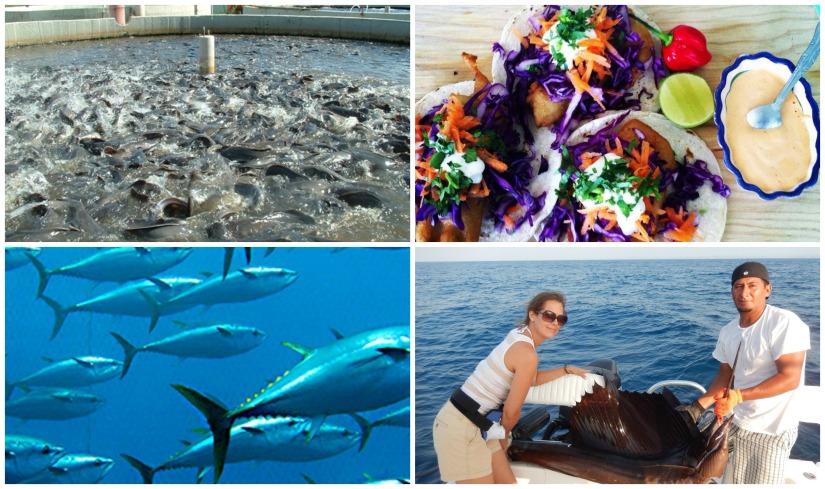
4073ADD6-FACA-4F2E-9FD8-74F984CE9B25.jpgLiving by the ocean, it is amazing to me that when I go to the corporate-owned supermarket the only seafood available is imported and most likely farmed. To get local fresh fish one needs to go find the guys with coolers on the street corner or small fish stalls.

While for most of us fish is an occasional meal, chicken, beef and pork being the most common protein in the North American diet, for much of the world fish is a main staple.

About 1 billion people largely in developing countries rely on fish as their primary animal protein source. In 2010, fish provided more than 2.9 billion people with almost 20% of their intake of animal protein, and 4.3 billion people with about 15 % of such protein.

At Café Juanita and Frida’s Fish Taco Food Truck, we are committed to only serving locally caught fish. This means occasionally not having fish or at times ‘making do’ with fish that are less popular.

When I first moved to Southern Mexico almost 20 years ago the waters were abundant with marine life. My then-husband routinely went diving for lobster, came home with fresh yellow fin tuna or amberjack.

In the past few years I have noticed a large decline in the amount and variety of fish available. Part of this is due to warmer waters and less cold currents that my favorite fish favor. Causes of this are global warming, overfishing by large-scale fisheries, pollution and contamination.

A few things you can do to protect the ocean and guarantee delicious fish tacos will still be available in 20 years!

  1. Eat sustainable seafood.

Global fisheries are on the verge of collapse. According to the U.N. Food and Agriculture Organization (FAO), three quarters of the world’s fisheries are now overexploited, fully exploited, significantly depleted or recovering from overexploitation. Ask your seafood restaurant or fish market to buy from sustainable fisheries. Look for special terms like “line caught”, “diver caught”, “sustainably caught” or “sustainably harvested.”

  1. Reduce energy use.

Carbon dioxide from burning fossil fuels is making our oceans more acidic. One consequence could be the loss of corals on a global scale, as their calcium skeletons are weakened by the increasing acidity of the water. There are many simple ways you can reduce your energy use. Ride a bike, walk or use public transportation. Use high efficiency appliances in your home. Turn off appliances when they aren’t in use. Turn up your thermostat a few degrees in the summer and down a few degrees in the winter. Use compact fluorescent light bulbs in your house.

  1. Use reusable plastic products.

Plastic debris in the ocean degrades marine habitats and contributes to the deaths of many marine animals. Because floating plastic often resembles food to many marine birds, sea turtles and marine mammals, they can choke or starve because their digestive systems get blocked when they eat it. Help prevent these unnecessary deaths—use cloth grocery bags and reusable water bottles.

  1. Properly dispose of hazardous materials.

Motor oil and other hazardous materials often end up washing into coastal areas because they aren’t disposed of properly.  This pollutes the water and hurts the overall health of our oceans. Be sure to dispose of hazardous waste in an environmentally safe way.

  1. Use less fertilizer.

When fertilizers are used in gardening and agriculture, the excess eventually ends up in the ocean. One result is a “dead zone” — an area with very low levels of oxygen in the water — the size of New Jersey in the Gulf of Mexico during the spring and summer. Since all marine life requires oxygen to live, including fish and shrimp, they must flee the area or die. Many other coastal areas are at risk too. So, use fertilizer sparingly and remember more is usually not better.

  1. Pick up garbage and litter near beaches.

Much of the plastic and debris found in the ocean has its beginnings in beach litter. As beach crowds increase, so does the amount of trash left behind. Don’t let your day at the beach contribute to the destruction of our oceans. Bring a trash bag with you for your garbage and volunteer for beach clean-ups.

  1. Buy ocean-friendly products.

Avoid products produced through unsustainable or environmentally harmful methods. For example, avoid cosmetics containing shark squalene and jewelry made of coral or sea turtle shell. These products are directly linked to unsustainable fishing methods and the destruction of entire ecosystems.


Food

The Perfect Bite

I am a dainty eater. Maybe discriminating is a better word. I don’t like to feel full, definitely not stuffed. I like to stop eating at the point where I feel sated but I might have a little more room in case something else is around the corner. Going to a restaurant with me can be annoying, occasionally I declare myself done after consuming only a third of what’s on the plate. I am specific about what I want….. no buffets, no overstuffed American-style plates that could feed a small village, no coffee in glass cups, toast must be buttered when it is hot- is there anything more depressing than unbuttered toast with a little-frozen package of butter on the plate?

I don’t mind eating alone in restaurants. Books are always a good prop, I like the freedom to eat slowly and focus on the food. Especially if I am eating something so exquisite that it will make its way into my food memory hall of fame. Memories I pull out with relish and such detail that I can almost recreate the taste in my mind. So, despite being a dainty eater, I love food.  It’s that I am in such awe of those perfect bites; a moment on your tongue, swallowed and then gone- that’s why it’s important to pay attention.

People are always asking what I miss from Canada. Nothing really I say… but croissants. I didn’t even know how spoiled I was growing up in such an abundance of buttery lightness. My father would slip me a five dollar bill on Sunday mornings and send me to the family-run grocery store next door and I would come home with a half dozen croissants. This was our pre-breakfast… later would come brunch. The croissants were light and flaky, staining the brown paper bags they were served in and leaving crumbs between the plate and your mouth. These croissants didn’t need anything added; no jam or knives necessary- you pulled them apart with your fingers, the warm dough stretching and crumbling. Eating them was like not having a care in the world.

When my daughter was little and we spent summers in Montreal, we would stop by the bakery after day camp; an almond croissant for her and a plain one for me. We were such frequent customers that the counter girl visited us in Mexico a couple of years later.

Recently, a friend of mine was driving me through the streets of Oaxaca on our way to breakfast when, over the smell of exhaust and city fumes, I caught the beckoning odor of butter and baking. I turned and saw something fleeting out of the corner of my eye- a small doorway. I hesitated for a moment, like when you see someone you might know but haven’t seen for a while and you are not sure if you should say hi.

“Do you mind driving around the corner? Was that a bakery?” I said.

My friend drove around the block and double parked outside the small door.

“I’ll just be a moment,” I said.

Yes, the smell of baking and butter hugged me. Baguettes lined the walls like old friends. Not supermarket–style baguettes- these were long and thin like elegant Frenchwomen’s arms. Pastries sat in baskets in a glass case. One solitary croissant smiled up at me and whispered ‘bonjour.’ I ordered fast, randomly pointing to a focaccia, almond croissants, and a sourdough. All packaged up in brown paper bags.

Back in the car I pulled out the bag with the lone plain croissant and ripped off a piece for my friend.

“Here, try this!” I said stuffing a piece into his mouth as he drove, then I ripped off a piece for myself, leaving flaky buttery crumbs all over the seat. The texture of the croissant was perfect and when I put it in my mouth I thought… Am I going to have to share the rest of this? I did… but I didn’t want to.

Boulenc Bakery, Porfirio Diaz 222A, Oaxaca, Oaxaca, 01 951 514 0582 

Open 8am- 8:30pm


Living

Supporting Girls’ Education

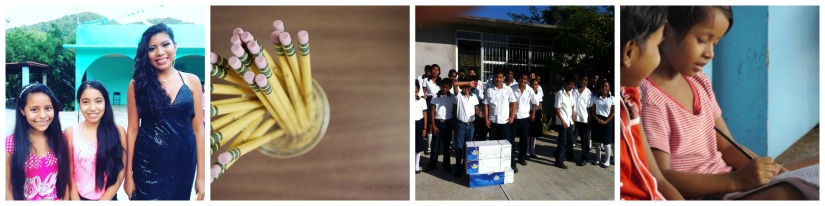
PicMonkey CollageFifteen is a magical age- in Mexico it is the time of quinceañeras and celebration as girls teeter on the brink of womanhood. It is also the age of high teen pregnancy rates- especially in lower income areas. The report — “Maternity childhood” Population Fund United Nations (UNFPA) revealed that Mexico is the leading nation in teen pregnancies with the alarming rate of 64.2 teen pregnancies per thousand births. Generally speaking, teen pregnancies are associated with poorer living conditions and the girls receiving lower levels of education. Girls with a higher education level, with a dream for the future and with a hope of success are much less likely to get pregnant.
A few years ago I met Johanne Lalonde in one of my cooking classes. In my classes I talk a great deal about the magic of the tiny village where I live- just 25 minutes from a world-class resort area but a world away- with no telephones, internet and many households still cooking on open fire, growing their own corn and maintaining an incredible amount of self-sufficient living. The village has a kindergarten, an elementary school and a secondary school (grades 7, 8 and 9)- making it possible for children to be educated within the village until that magical age of 15.
I started to notice that while some girls continued studying to high school even though their families now had to cover transportation costs to attend the high school in a neighboring village- many did not. Many got pregnant.
While some studies point to the lack of contraceptive education or acceptance with regards to teen pregnancy. I firmly believe that education, visualization and hope of a future are much bigger factors. Young women and girls need to proactively choose their future.
From this idea, Johanne and I started a program we named ‘Sigue Estudiando’ (Keep Studying) with the goal of keeping girls in school. One girl from each grade in secondary school would receive a scholarship towards her future educational needs.
Unicef reports in their study on gender equality ‘Providing girls with an education helps break the cycle of poverty: educated women are less likely to marry early and against their will; less likely to die in childbirth; more likely to have healthy babies; and are more likely to send their children to school. When all children have access to a quality education rooted in human rights and gender equality, it creates a ripple effect of opportunity that influences generations to come.’
When we support girl’s education we are supporting not only the individuals but helping communities to break the cycle of poverty. We are in the second year of the program currently have 6 scholarship recipients and while it is early to track the success of such a program, I have no doubt that it is having a positive effect. I asked last year’s recipients to write a letter to Johanne and I was very moved when one of the young women succinctly wrote that the biggest gift, more so than the money, was the knowledge and encouragement that came from knowing someone was caring for their education.
If you are interested in helping or getting involved please contact me through The Eye.
theeyehuatulco@gmail.com
Currently I am trying to get laptops for this years recipients- if you would like to donate one or have a gently used one that you don’t use, please let me know.
Food

Refreshing Cocktails!

While the classic lime margarita is always a good choice for summer, we have been looking for something a little more sophisticated- more Fresh than freshman. Huatulco’s tropical climate offers a plethora of fruits to play with.

My two favorite cocktails for the summer season are the Watermelon Aperol Spritz and the Grapefruit Habanero Margarita. I first discovered the Aperol Spritz in Perugia, Italy after a harrowing 63 km bike ride. As I walked through the main plaza it seemed everyone was drinking an Aperol Spritz. Aperol is an low-alcohol aperitif, bright orange in color and infused with herbs and orange. I drank it the rest of the trip and when I returned home to Mexico I explored every avenue to get Aperol in Mexico. For the past few years it has been readily available in Super Che. While I love an Aperol Spritz, I find the prosecco can make it a bit boozy for an afternoon cocktail when I am craving something lighter that won’t put me to sleep.

Watermelon and Aperol Spritz13442269_10154225051693373_5872964024642716742_n

Muddle chunks of watermelon

3/4oz simple syrup

1oz Gin

¾ Aperol

¾ oz Lime Juice

1oz Club Soda

Mix and pour over crushed ice. Garnish with watermelon.


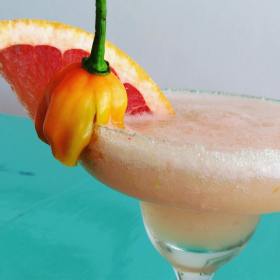
For something more savory I love this Grapefruit Habanero Margarita!13939367_10154377928953373_6190189472420602480_n

1.5 oz Habanero infused tequila

3oz Freshly Squeezed Grapefruit Juice

1/2 oz.Lime Juice

1/2 oz. Simple Syrup

Mix and pour over crushed ice. Garnish with habanero and grapefuit.


Living

Raising a Woman

original

Being a woman is difficult. From the moment we become aware of our female-ness we struggle between the desire to be the adored princess and to protect our dignity. The virgin/ whore dichotomy of the female sex is universal and as old as time.  If managing my own womanliness has been difficult, raising a woman is proving to be a constant revision of my own morals, hopes and expectations.

When my daughter was born she all loveliness and beauty which seemed like a blessing. As a woman I was well aware of the dangers and pitfalls of all that loveliness and I straddled wanting her to feel empowered yet cautious without scaring her- I didn’t want her experience in the world to violate the trust and faith about how beautiful life can be.

But the truth is that being a woman is difficult. When she was little I worried about pedophiles… what parent who hasn’t watched Law and Order hasn’t? We live in a world where after the 2004 tsunami in the Indian Ocean one of the biggest concern was all the children at risk for human trafficking. According to the U.S. State Department, 600,000 to 800,000 people are trafficked across international borders every year, of which 80% are female and half are children. Trafficking primarily involves exploitation which comes in many forms, including: forcing victims into prostitution, subjecting victims to slavery or involuntary servitude and compelling victims to commit sex acts for the purpose of creating pornography.

I consider myself someone who escaped the treacherous waters of childhood and adolescence somewhat unscathed; there was the man who exposed his penis to me in the park when I was 9, there was the man on the crowded bus when I was 12 who stuck his hand between my legs and gave me my first feeling of shame when I found myself too stunned to move or cry out, there was the ‘friend’ in college who pressed me against the pinball machine in a crowded bar and told me that for his birthday he wanted to rape me ‘Jodie Foster- style’. This is what I consider unscathed. Many of my friends- middle-class, University educated, strong women- have been raped, some by even several men at once, some by men they considered friends. Their stories weren’t made into Lifetime movies of the week- some of them said nothing, feeling that it was easier to forget, to move on. Now that my daughter is growing into womanhood I worry about everyone.

While I was at university, a ‘walksafe’ program was implemented and women were cautioned against walking alone after dark- in Canada after dark in the winter is 4pm! We thought this was normal. I found comfort studying Women Studies and feeling grateful that I wasn’t living in West Africa where female genital mutilation is still practiced (More than 200 million girls and women alive today have been cut in 30 countries in Africa, the Middle East and Asia) or Saudi Arabia where women aren’t even allowed to drive. I read Andrea Dworkin and Camille Paglia for guidelines on how to interpret this lurking feeling of persecution.  I listened to a lot of Ani DiFranco…. I still do. I struggled with wanting to feel sexy yet dignified.

People haven’t changed but our culture has. An article on how female athletes in the Olympics get more comments about their appearance than male athletes recently circulated. This is a nice safe subject compared to the one about the 16 year old girl who was raped in Rio by over 30 men (7 have been charged). Female sexuality is more pervasive than ever; Kim Kardashian posts nude selfies and gets called brave, Fifty Shades of Grey made submissiveness mainstream and with a marketing sleight of hand turned it into some kind of distorted version of empowerment.

Growing up in a world with ‘walksafe’ programs at least we were talking about the issues. Raising a daughter in the Kardashian age can make you want to punch someone in the face. Sexuality today is not something to protect, it is something every girl can own and feel empowered by….Really? I have my doubts. Paglia wrote that we can’t count on morality to protect us, while it seemed extreme and bordering on ‘blame the victim’ in the 90s I think it is a must in today’s Kardashian age.

At my daughters school last year there was a petition because a girl was sent home for inappropriate dress; too revealing. ‘We should be able to wear what we want!’ my daughter exclaimed like she was Rosa Parks fighting for a seat on the bus. I didn’t sign the petition. I don’t think it is fair to put the ‘choice’ on fifteen year old girls when we are raising them in a culture that has sexualized them from such a young age. Is it really a choice when societal values are so crass?

My daughter is growing up. She is beautiful, a very good and nice person. Sometimes she wears short shorts and tight tops that accentuate her breasts. I sometimes make her change her clothes. I want her to feel beautiful, loved and powerful. I want her to make good choices, but I know how difficult this must be in the Kardashian age. There is a lot I am sure I don’t hear about, but I hear about enough to know that my daughter cannot make these choices on her own. I have heard about other parents playing beer pong with fifteen-year-olds and letting them go to nightclubs when they are supposed to be having sleepovers.

I don’t care if my daughter is mad at me for being ‘strict’, for the midnight curfew- it was good enough for Cinderella-, for occasionally making her change her clothes, for taking away her phone when she is caught lying. My job as a parent is to protect and educate her so that when she is out in the world she is making choices that afford her dignity and self-respect. Because while she may look like a woman, she is still very much a little girl- we all are.

Food

Mushroom Summer

In the same way the simple pleasure of Proust’s madeleine led him down the road of memory, I can trace my relationship with mushrooms, and my refusal to eat them, as a road map through my childhood.

My father, an animal psychologist and amateur mycologist was my first and best travel companion. He was often described as eccentric with his Albert Einstein hair, clothes that always looked as though he had just rolled out of bed and his plaid shirt pocket always with a Mont Blanc pen sticking out. When I was nine years old we rode the train across Canada to British Columbia where we stayed in a log cabin and he taught me how to fish. Before I went to University we explored the Cabot Trail and Peggy’s Cove and before my move to Mexico we went to Germany where we retraced memories of his childhood, eating in upscale restaurants and fancy hotels. “Always spend your money on good food” he liked to remind me when I was a struggling student.

Augusts were reserved for the cottage, cottage being a too quaint word for the large house that we rented each summer. The furniture was from the 1940s, there was a record player and black and white photos of the original owners decorated the walls. My older brother and sister would come and go, but I would spend the whole month lying on the dock with the friends I met up with each year. My father spent his cottage days foraging for mushrooms. He left early in the morning with his wicker baskets and his walking stick, limping his way through the village and into the forest. He had his spots. My sister and I accompanied him but it was soon clear that my sister’s interest and knowledge about mushrooms far exceeded my own and I soon drifted away from these expeditions. Mushrooming wasn’t as exciting as fishing or swimming across the lake or losing myself in the pages of a book. Opting out, I became the frivolous daughter, the one who preferred hanging out on the dock or going to parties with the summer kids.

My father and my sister would return in the afternoon, their baskets full with chanterelles and boletuses. There were stories of poisonous mushrooms that looked just like edible ones and of course there was Alice from Wonderland who found a mushroom that would make her grow bigger or smaller depending on which side she chose. I decided mushrooms were a very risky business and I refused to eat them. This presented a dilemma for my father who managed to incorporate mushrooms into every dinner. So for the month of August I lived on peanut butter toast, Bull’s Head ginger ale and the occasional all-dressed hot dog from Larry’s Snack Bar. My mushroom boycott was only second to my teenage vegetarianism as food protest, which ended our smoked pork excursions to Chinatown and devouring my father’s veal birds. Food was my teenage rebellion – that, and rolling my eyes at his repertoire of ‘fun guy- funghi’ jokes.

I have become less rigid in my eating habits; being in the food business, I will try just about anything, but mushrooms still have a special place of mystery for me. I am not alluding here to any psychedelic varieties, I mean regular old portobellos, shiitakes and chanterelles – whose earthiness transports me back to those summer days.

A few years ago when I first heard of the Wild Mushroom Festival in Cuajimoloyas, I immediately wanted to go. Each year, however, I found a reason that making the trip to Oaxaca for this two-day event, which includes mycologists, foraging and meals entirely prepared with mushrooms, was not possible.

This year I went. I kept my mushroom reticence a secret, which was fine, as I have always liked a good secret. I would eat everything and smile.

It was foggy and cold when we arrived in the town square of Cuajimoloyas that first day. I had travelled overnight and had been looking forward to ‘checking in’ to my cabin, but after a watery coffee we were asked to choose between the 3-hour or 5-hour walk and we were led into the woods. My inner voice was thirteen again but on the outside I smiled and walked along. The woods were like a movie set for a Grimms’ fairy tale, blanketed with pine needles, moss, lichens, succulents…. everything so moist and alive you could practically hear the mushrooms growing. Everyone in my group was collecting mushrooms with great enthusiasm. Within an hour our baskets were brimming. After five hours we gathered with the rest of the teams in a field for a picnic lunch. Each team’s mushrooms were laid out, examined and counted by the festival organizers and mycologists. My team collected over 223 different mushrooms – I didn’t even know such a thing was possible. Lunch was mushrooms in a red adobo sauce, which I ate with a smile, but was not enough to convince me that I could be a mushroom lover.

After a good night’s sleep in a cocoon of blankets, I awoke refreshed and ready for day two, which was a series of workshops, discussions with mycologists and cooking. Vendors had set up stalls in the town square and the products ranged from woolen hats (I bought one the first day and even slept in it) to organic chocolate, mushroom teas that held the promise of healing … well,  just about anything.

The cooking demonstration was given by Martha Contreras, a local from Cuajimoloyas. We prepared Amanita caesarea, commonly known in English as Caesar’s mushroom, a la Mexicana, by sautéing the mushrooms with tomato, onion and jalapenos in a large clay pot on an anafre (small tin charcoal brazier). A handful of epazote added a lovely top note and the mixture was rolled up in a potato tortilla. It was my ‘aha’ mushrooms moment. The flavors were so delicate and the mushroom still raw and fresh enough to not be chewy.

I came away from the festival with a healthy supply of dried mushrooms, ideas and an excitement for learning more. I met so many interesting people, as the festival attracts biologists, naturalist, birders and mycologists.

My father passed away just as I was making Mexico my permanent home, and while he was supportive, he was paternal in his concern. At his funeral, the rich chanterelle stews he was known for were served. A good measure for me is to wonder what he would think if he could see me now. As I trudged through the woods at the Cuajimoloyas festival, suppressing a craving for peanut butter and ginger ale, I think he would have loved it.

For information about next year’s festival or events in the area of Cuajimoloyas contact Expediciones Sierra Norte Oaxaca at www.sierranorte.org.mx


 

Food

Deep Fried Boletus’

I just had the pleasure of attending the Cuayimoloyas Mushroom Festival located 3200 meters above sea level and an hour away from the city of Oaxaca. The festival included a guided 5 hour foraging walk through the lush Grimms’-fairytale – like forest, a night in a cozy cabin and incredible local food. The festival attracts mostly naturalists, biologists, birders and of course mycologists.

The highlight for me was the cooking class led by Martha Contreras. One of the dishes she showed up was deep fried Boletus’- all done on an anafre of course!

1. In a mortar and pestle smoosh 10 small garlic cloves and a handful of fresh oregano until they form a paste. Add 1/2 teaspoon ground black pepper and blend.


2. Slice Boletus’ into 3/4 inch pieces.

3. Add 1/3 cup of water to garlic paste mixture, 3 eggs and 1/2 cup of bread crumbs.

4. Soak pieces of Boletus in mixture for 10 minutes.

5. Fry in 1/4 of very hot oil until browned.

6. Serve with fresh tortillas.